
Think You Don't Have an Injury Case? Here Is Why You Might Be Wrong (Copy)
After a serious accident, most people make a critical mistake: they assume they know whether or not they have a legal claim.
Every day, injured victims walk away from life-changing compensation simply because they relied on a police report, trusted their employer to "do the right thing," or assumed an accident was just "unclear."
The truth is, you cannot accurately determine whether you have a personal injury case on your own. Personal injury law looks far beyond the immediate surface of an accident. Here is why you might have a high-value claim—even if you think you don’t.
1. Police Reports Are Not the Final Word (Especially in Truck Accidents)
One of the most common reasons victims assume they don't have a case is that the police report blames them or states fault is inconclusive.
Why Police Reports Can Be Inaccurate:
Limited Scope: Responding officers must make quick determinations at the scene, usually within minutes.
Different Standards: Police investigate whether a traffic crime or violation occurred; personal injury law evaluates civil negligence and liability.
Hidden Evidence: Officers on the scene do not pull truck maintenance records, examine Electronic Logging Devices (ELDs), or inspect whether a commercial driver exceeded federal service hours.
Even if an officer wrote that you were at fault, a deeper investigation into corporate maintenance logs, black box data, and federal regulation violations often reveals that a trucking company’s systemic negligence was the true cause of the crash.
2. "Unclear Fault" Does Not Mean No Case
If an accident happens quickly or involves multiple vehicles, victims often throw up their hands and assume, "It’s my word against theirs, so I don't have a case."
Fault in personal injury law is rarely black-and-white. In many jurisdictions, modified comparative fault rules mean you can still recover significant compensation even if you shared partial responsibility for the incident.
3. Third-Party Liability: Responsible Parties You Don't Even Know About
Most people only look at the person directly involved in the crash. An experienced attorney looks at the entire chain of responsibility.
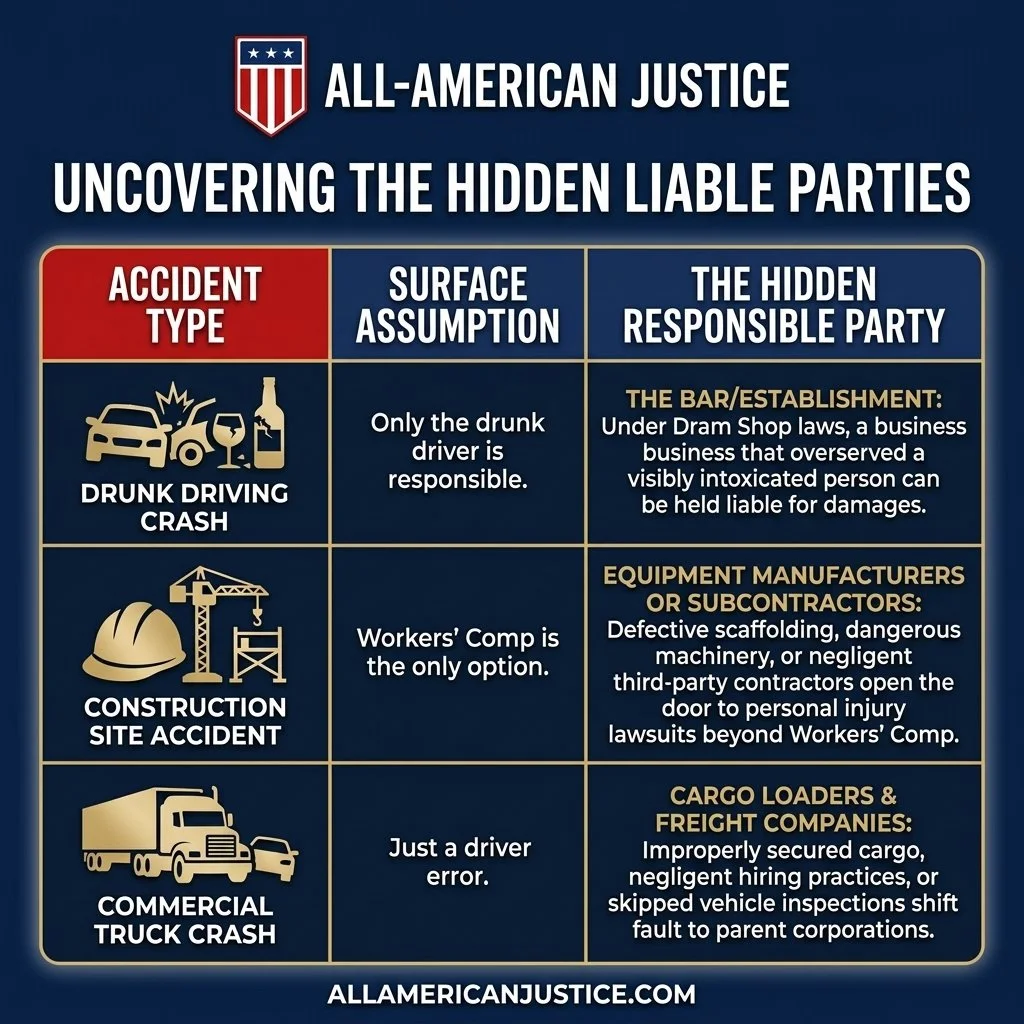
4. Why Workers’ Compensation Is Rarely Enough
When you suffer a serious or catastrophic injury on the job, your employer or insurance adjuster might assure you that Workers’ Compensation will "take care of everything."
While Workers' Comp covers basic medical bills and a fraction of lost wages, it never compensates you for pain and suffering, emotional distress, or full lost earning capacity.
If a third party—such as a property owner who failed to maintain safe premises, a machinery manufacturer, or a negligent driver on the job—contributed to your injury, you can file a personal injury claim alongside your Workers' Comp claim. This is often the only way to secure the full compensation required for lifelong recovery.
Act Fast: Evidence Disappears and Time Limits Apply
Assuming you don't have a case gives insurance companies a massive head start. Every day you wait:
Black box data and dashcam footage get overwritten.
Physical evidence at the scene washes away or gets repaired.
Witness memories fade.
The Statute of Limitations continues to tick down, risking your right to file entirely.
Speak with All-American Justice Before You Decide
Never rely on guesswork, police reports, or insurance adjusters to decide whether you have a claim. Only a qualified, licensed injury attorney has the resources and legal knowledge to uncover hidden liability and evaluate the true value of your case.
If you or a loved one has been injured, contact All-American Justice today for a free, no-obligation case evaluation. Let us investigate what really happened while you focus on healing.
Share this article by clicking here