
Razor Blades in Candy? Not so Much. Food allergies? Something to take seriously.
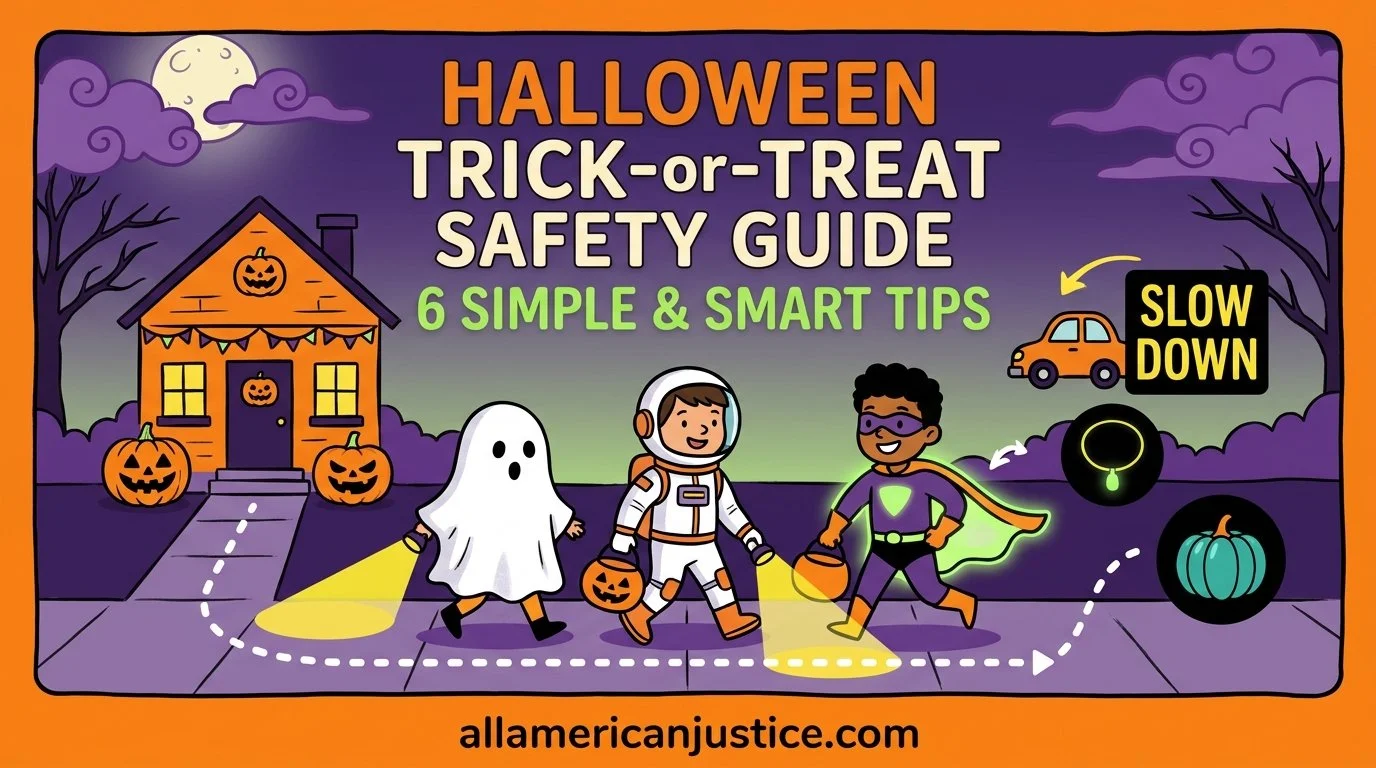
Every October, neighborhood sidewalks fill with ghosts, superheroes, and goblins hunting for king-sized candy bars. While parents naturally want to keep their kids protected, the endless internet warnings can leave families feeling overwhelmed by panic instead of enjoying the night.
At All-American Justice , we believe in protecting families with facts, common sense, and personal responsibility. Let’s cut through the scary urban legends, look at the actual statistics, and cover actionable, realistic steps to keep your trick-or-treaters safe this Halloween.
Halloween Myths: What Not to Worry About
Before diving into safety strategies, let’s clear up two persistent myths that cause unnecessary fear every spooky season:
Myth 1: Poisoned or Tampered-With Candy
Every year, headlines warn about tainted treats or malicious strangers handing out dangerous candy. Decades of research by criminologists show that instances of stranger-danger candy tampering are virtually non-existent—almost every historical claim turns out to be a hoax, a mistake, or an isolated non-stranger event.
Myth 2: Hidden Razor Blades and Needles
Much like poisoned candy, stories of sharp objects hidden in apples or chocolate bars belong strictly in horror movies. You don’t need to rush your child’s treat bag to a hospital X-ray machine.
Real Halloween Danger:
The true threat on Halloween night isn't found inside a candy wrapper—it’s out on the street. According to traffic safety data, child pedestrian accidents double on Halloween evening compared to any other night of the year. Low visibility, dark costumes, excited kids darting between cars, and distracted neighborhood drivers create a high-risk environment.
Six Practical Tips to Keep Your Family Safe on Halloween
Focusing on traffic awareness, visibility, and smart neighborhood navigation keeps the night fun without sacrificing safety. Here are six practical strategies that go beyond the basic advice:
1. Drive Like You Expect Kids in the Street (Because You Should)
If you must drive during trick-or-treating hours (typically 5:00 PM to 8:30 PM):
Slow down dramatically: Drop your speed 5 to 10 mph below posted residential speed limits.
Eliminate cabin distractions: Turn off the radio, put cell phones on Do Not Disturb, and ask passengers to help keep an eye on the road.
Treat driveways like intersections: Kids frequently run across driveways without checking for backing vehicles. Pause completely before crossing any sidewalk area.
2. High-Vis Hack: Integrate Glow into the Costume Design
Telling a 7-year-old superhero to wear a bulky yellow safety vest over their costume is a non-starter. Instead, make visibility part of the costume:
LED Shoelaces & Clips: Attach cheap, clip-on safety lights to shoes, belts, or trick-or-treat buckets.
Reflective Tape Trim: Apply reflective fabric tape along sleeve hems, capes, or backpack straps so headlights reflect them immediately.
Glow Necklaces as Perimeter Markers: Loop glow sticks through wagon handles, stroller wheels, or bucket handles to create clear borders around your group.
3. Mask Alternatives: Master the Art of Face Paint
Costume masks limit peripheral vision and make breathing uncomfortable—two major reasons kids stumble off curbs or trip over lawn decorations.
Swap plastic masks for non-toxic face paint.
If a mask is essential, cut the eye openings slightly larger so your child maintains full 180-degree peripheral awareness when stepping off sidewalks.
4. Upgrade Your Group Supervision Strategy
Active supervision means more than trailing behind on your phone.
The "Anchor Adult" System: If walking with a larger group of parents and kids, assign one adult to lead the front and one to trail the rear ("the anchor").
Establish "Porch-Only" Rules: Remind younger kids that trick-or-treating stops at the front door or porch—never enter a home or garage, regardless of how friendly the host seems.
Set a Flashlight Height Rule: Teach kids to aim flashlights down at the ground directly in front of their feet to spot uneven sidewalks, tree roots, and electrical cords rather than shining light into oncoming drivers' eyes.
5. Check Candy for Allergies & Choking Hazards (Not Poison)
While poison isn't a realistic threat, food allergies and choking hazards are:
The Post-Haul Sort: Have kids wait to eat candy until you get home under good lighting. Sort out hard candies or small toys for children under age 4 to prevent choking.
Look out for the Teal Pumpkin Project: Houses displaying a teal-painted pumpkin offer non-food treats (like stickers, glow rings, or small toys), making them safe stops for kids with severe peanut, dairy, or gluten allergies. The Teal Pumpkin Project was started in East Tennessee and expanded nationally by Food Allergy Research & Education (FARE). FARE is a great resource for parents with trick-or-treaters with allergies or anyone who wants to make Halloween safe for everyone!
6. Map Out a "Low-Traffic" Neighborhood Route
Stick to Well-Lit Sidewalks: Avoid streets without paved walking paths or streetlights.
Cross at Corners: Teach kids to cross streets strictly at marked crosswalks or corners—never dart out from between parked cars where drivers cannot see them.
What to Do If the Unexpected Happens
Even with careful preparation, accidents can occur when drivers fail to exercise proper caution in residential areas. If a negligent driver injures you or your child on Halloween night—or any day of the year—taking swift action is essential to protect your rights. Contact the attorneys at All-American Justice today at (423) 855-1755 or visit allamericanjustice.com for a free, confidential consultation.
Attorney advertising